
 Tripadvisor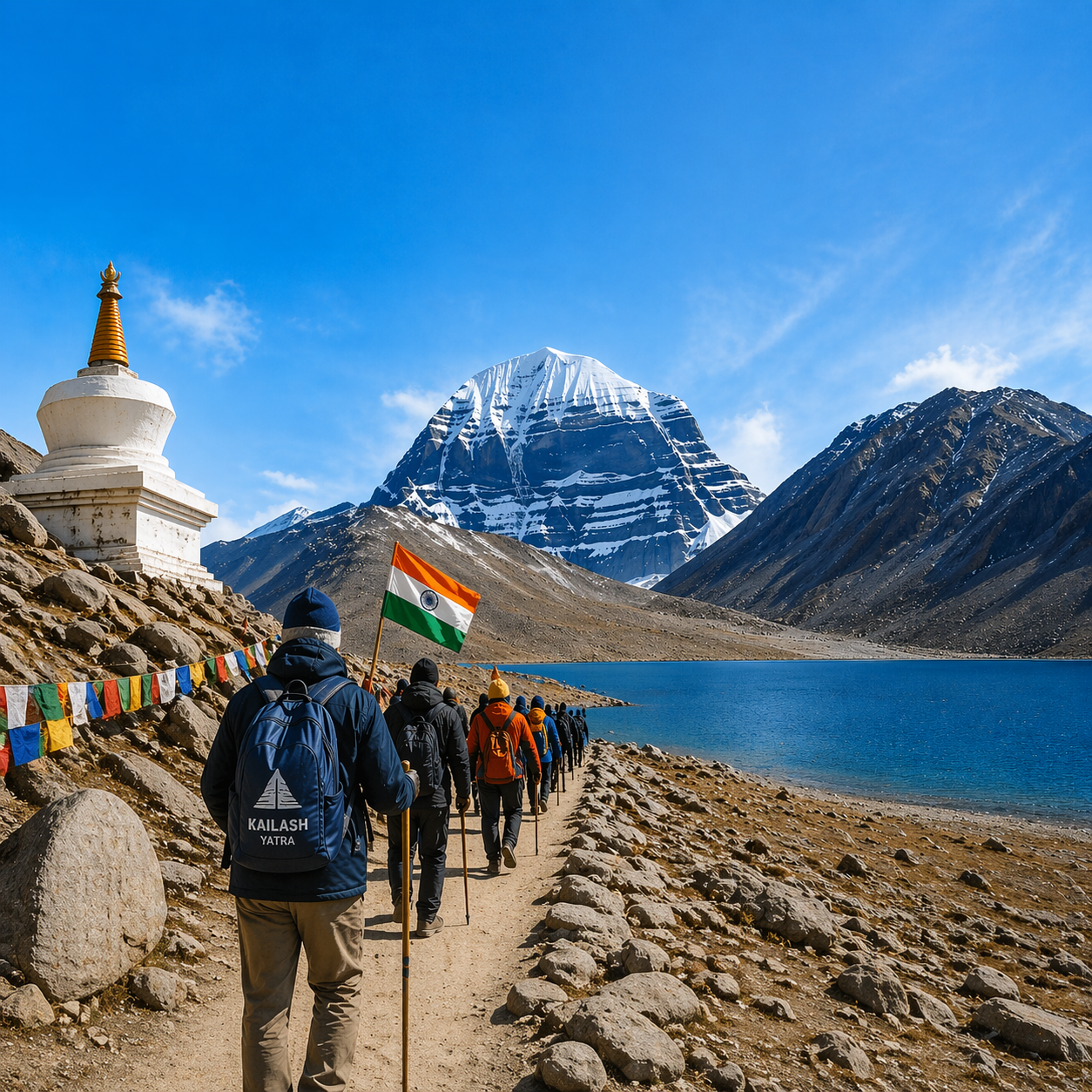
Recommended Itinerary
Adventure Tour Packages
Upon your arrival at Kathmandu airport, a Satluj Travels representative will greet you and escort you to your hotel. You will receive all details about the program during check-in. Evening dinner will be served at the hotel. Overnight stay in Kathmandu.
Morning breakfast at the hotel. Proceed for a local sightseeing tour of Kathmandu, which includes a visit to the sacred Pashupatinath Temple and Budha Nikanth Darshan (also known as the Sleeping Vishnu). Overnight stay at the hotel in Kathmandu.
This is the first day of the sacred journey. Begin with an early morning breakfast at the hotel. Next, proceed toward the China border via Kathmandu border crossing by reserved tourist coach. This journey takes approximately 5 hours to complete. Our representative will assist with customs formalities, and then you will enter Tibet. Enjoy lunch in the afternoon. After lunch, proceed to Nyalam – a town in Tibet. Overnight stay will be at a guesthouse. Breakfast and dinner will be provided at the campsite, while lunch will be prepared by our escorts.
Enjoy visiting the local tourist sites in Nyalam city. Spend the day exploring the unique culture and landscapes of this Tibetan town. Overnight stay at the guesthouse.
Morning breakfast at the guesthouse. Later, drive to Dongba for approximately 8 hours. Overnight stay will be in a guesthouse.
Enjoy breakfast in the morning, followed by a 7-hour drive to the holy Mansarovar Lake. Experience Mansarovar Parikarma by vehicle. Enjoy your first day staying beside the sacred Mansarovar Lake. Overnight stay will be at a guesthouse.
Take a holy dip in the sacred waters of Mansarovar Lake. You may also participate in Pooja, Hawan, and other spiritual activities according to your religious traditions. Later, drive to Darchen – journey time is approximately 2.5 hours. Overnight stay will be at a guesthouse. You may also enjoy an excursion to Ashtapad at an additional cost.
Begin your first day of the holy Kailash Parikrama (circumambulation of Mount Kailash). It is advisable to start your journey early in the morning after breakfast. You will drive up to Yumdwari and then begin walking for 6 to 7 hours. Horses can be arranged for those who cannot walk for this long duration. Yaks will carry kitchen utensils and equipment. Overnight stay will be in a mud house or tent (based on availability).
After breakfast, begin your challenging journey to Dolma-La Pass at an altitude of 5,400 meters (17,700 feet) . The weather conditions at Dolma-La Pass are very harsh and unpredictable. It is strongly recommended to start your journey as early as possible. Overnight stay will be in a mud house or tent, depending on availability.
After breakfast, begin trekking down to Darchen. Upon completing your trek, our vehicle will pick you up for further road travel. Continue driving to Mansarovar Lake, filled with spiritually significant waters. Next, proceed for the return journey back to Kathmandu, following the same route with the same system and guidelines for all accommodation and meals. Meals and overnight stay will be at a guesthouse in Paryang.
After morning breakfast, proceed for the return journey to Nyalam. Return to Nyalam, which is the last place to stay in Tibet before crossing back into Nepal. Overnight stay at a guesthouse.
After clearing customs formalities, you will be picked up by the Nepal side representative and driven toward Kathmandu. This journey takes approximately 5 hours to complete. Upon arrival, check into your hotel. Overnight stay will be at the hotel in Kathmandu.
Morning breakfast at the hotel, followed by hotel check-out. You will be transferred to Kathmandu airport to catch your return flight for your onward journey home.
Important Remark
These are indicative rates per person on the basis of 30 guests traveling together in a group coach tour on specific dates. Rates will increase for smaller families and individuals.
Offers can also be customised with International branded hotels such as Marriott , Hilton , Taj , Oberois , Best Western , etc .
Pricing On Request
OFF - SEASON PERIOD
01st April – 30th September 2024
(Except For Festive Period & Long Weekends)
Hotel Category
Package Cost Per Adult
Budget
Rs. 6000
Standard
Rs. 7000
Deluxe
Rs. 8000
Super Deluxe
Rs. 9500
Luxury
Rs. 10500
Premium
Rs. 12000
SEASON PERIOD
01st October 2024 – 31st March 2025
(Except For Festive Period, Long Weekends, Christmas & New Year Period)
Hotel Category
Package Cost Per Adult
Budget
Rs. 7000
Standard
Rs. 8000
Deluxe
Rs. 9000
Super Deluxe
Rs. 10000
Luxury
Rs. 12000
Premium
Rs. 14000
Accommodation
On Request
Accommodation
Hotel Category
Delhi
Agra
Jaipur
Budget
Hotel Suzi International / Hotel Grace
Hotel Dazzle / Riya Palace
Thikana Palace / Hotel Chitra Katha
Standard
Trim Room @ Palm D’or/ Hotel NirmalMahal
Panna Paradise / Optimum Tara Palace
Trim Mount Blue Jaipur / Rajputana Haveli
Deluxe
Grand Uddhav / Hotel Godwin Deluxe
Hotel Dasaprakash / Taj Villa
Amer Valley By Parfait / Om Niwas
Super Deluxe
Legend Inn / Florence Inn
Hotel Amar / Royale Residency
Nahargarh Haveli / Krishna Palace
Luxury
Regent Grand / Mantra Amaltas
AtulyaaTaj/ The Retreat
Nirbana Palace A Heritage Hotel / Zone By The Park
Premium
Radisson Blu PaschimVihar / Holiday Inn New Delhi MayurVihar
Radisson Hotel Agra / Clarks Shiraz
Ramada Jaipur / Laxmi Palace Heritage Boutique Hotel
Inclusions
What’s Included
What’s Excluded
- On Request
- On Request
Introducing Delhi Jaipur and Agra with Fatehpur Sikri Tour
The People in Delhi Jaipur and Agra
As in the rest of India, the people of the Golden Triangle are a colorful mix of communities, religious, languages and traditional tribes. All the gradations of the caste system are found here the upper brahmins and kshatriyas, the middle-ranking, vaishyas and the lowest, menial labourers. Almost all of India’s communities are represented in Delhi: dark-skinned Tamils and Keralites, lighter-skinned Punjabis, the shorter, squatter Bengalis, as well as Maharashtrians, Gujaratis and students from the north-eastern states of Assam and Nagaland.
It is interesting to see how certain communities have created their own housing areas in the capital. Janak Puri in west Delhi is dominated by Keralites and Tamils, while Chittaranjan Park in south Delhi is made up almost entirely by Bengalis. It is complete with a market that stocks a wide variety of delicious fish.
Thousands of migrant labourers from the villages of Bihar, Uttar Pradesh and Haryana swarm into Delhi to look for work. Certain jobs and services have become associated with distinct communities and castes. Tribal Christian girls from Bihar work as housemaids, a number of plumbers come from Orissa, the nurses from Kerala, and the doss (south Indian bread) restaurants are, of course, all staffed by Tamils or Keralites.
In Delhi you can also see the puppie, or Punjabi Upwardly Mobile Professional, zoom by in a Hyundai or Honda and swing in the city’s booming night-clubs. India’s Generations x are called trendy conservatives. They dress fashionably and listen to the latest western pop music, but few are able to break out of parental control. Living together, having gay relationships and even divorce are still fairly unacceptable.
In Rajasthan the most visible group are the Rajputs — the warriors representing different noble houses — like the Kachhawahas of Jaipur, the Rathods of Jodhpur and the Sisodias of Mewar. Together with the brahmins they constitute less than a tenth of Rajasthan’s population. With a brightly coloured turban and handlebar moustache, the Rajput prides himself on his ancestry, although many have now fallen on hard times and have been forced to convert their ancestral properties into luxury hotels. Rajput villagers might be tall and brightly turbaned, but they are also impoverished and skinny.