
 Tripadvisor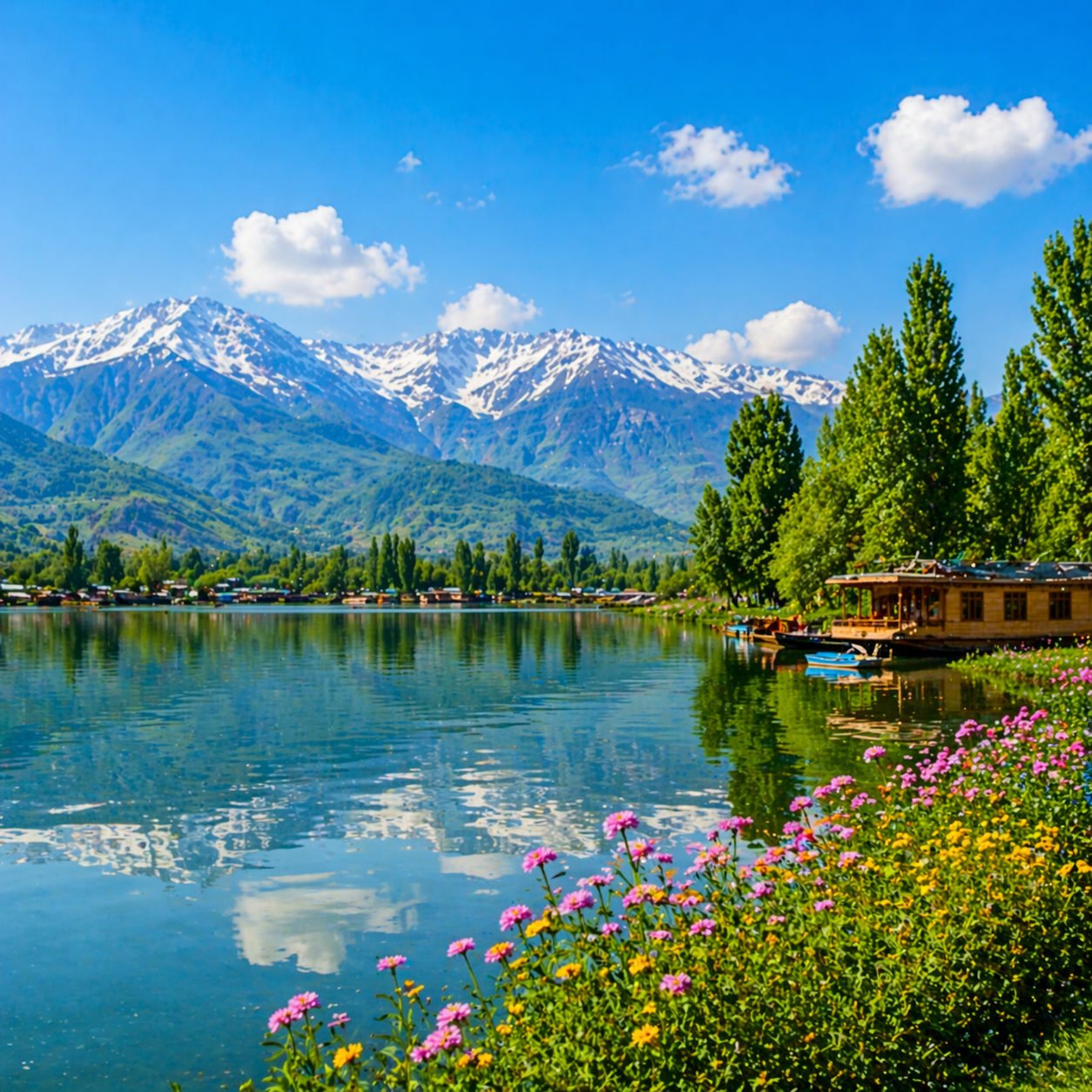
Recommended Itinerary
Adventure Tour Packages
Upon arrival at Srinagar airport, a Satluj Travels representative will meet and greet you. You will be transferred to a deluxe houseboat in Srinagar. The evening is free to relax and enjoy the scenic views of the mountain ranges near Dal Lake. Dinner and overnight stay will be at the deluxe houseboat.
After morning breakfast, proceed for a Shikara boat ride on Dal Lake. During the ride, explore the waterways, backwaters, canals, floating gardens, vegetable markets, water lilies, lotus flowers, easily accessible mobile vendors, and handicraft centers. Return to the deluxe hotel for lunch. Later, visit the famous Mughal Gardens including Cheshma Shahi (Royal Spring) , Nishat Garden, and Shalimar Bagh. Next, visit the Shankaracharya Temple located on a hilltop on the Zabarwan mountain, offering panoramic views of Srinagar city. Also visit a handloom center famous for producing Pashmina/Shahtoosh shawls and world-renowned carpets. In the evening, return to the deluxe hotel for dinner. Overnight stay at the hotel.
Morning breakfast at the hotel, then proceed toward Pahalgam, located in the southeast of Srinagar at a distance of 96 km. Pahalgam is one of the most fascinating hill resorts, surrounded by high mountains, dense forests, and high-altitude lakes. The place is a heaven for skiing, pony trails, angling (rainbow and brown trout), horse riding, and trekking. Interesting valleys nearby include Aru Valley, Kolhai Glacier, Shesh Nag, Chandanwari (the route to the holy cave), Baisam, and Mamil – famous for a 9th-century Shiva Temple. Check in at the hotel and refresh yourself. After lunch at the hotel, explore the surroundings with scenic mountain views. Return to Srinagar for dinner. Overnight stay at the hotel in Srinagar.
Morning breakfast at the hotel, followed by an excursion to Gulmarg. Located to the west of Srinagar, Gulmarg is another paradise for tourists with its snow-capped mountains. It is a heaven for winter sports, featuring a ski resort, cable car (Gondola) , and the highest 18-hole golf course in the world. In the evening, return to the hotel for dinner. Overnight stay at the hotel.
Enjoy morning breakfast at the hotel. Proceed for a local sightseeing tour of Srinagar city (old and new areas) . Next, proceed to Srinagar airport to board your flight for your onward destination.
Pricing
Important Remark
The prices shown below are estimated figures per traveler, calculated assuming 30 guests journeying together as a group on a coach tour during fixed departure dates. These rates will be higher for smaller family units or individual travelers.
Packages may also be personalized with globally recognized hotel chains including Marriott, Hilton, Taj, Oberoi, Best Western, and others.
Above pricing assumes a minimum of six adults traveling together, sharing two rooms.
OFF - SEASON PERIOD
01st April – 30th September
(Except For Festive Period & Long Weekends)
Hotel Category
Package Cost Per Adult
Budget
Rs. 9000
Standard
Rs. 10000
SEASON PERIOD
01st October 2024 – 31st March 2025
(Except For Festive Period, Long Weekends, Christmas & New Year Period)
Hotel Category
Package Cost Per Adult
Budget
Rs. 7000
Standard
Rs. 8000
Deluxe
Rs. 9000
Super Deluxe
Rs. 10000
Luxury
Rs. 12000
Premium
Rs. 14000
Accommodation
Hotel Category
| Srinagar Hotel |
|---|
Agra
Jaipur
Budget
Hotel Shefaf (or similar category hotel)
Standard
Hotel Royal Arabia (or similar category hotel)
Accommodation in above or similar category hotels.
Inclusions
What’s Included
What’s Excluded
- Pickup and drop-off at Srinagar airport
- Intercity transfers by private car
- 1 night accommodation in Srinagar houseboat with breakfast and dinner
- 3 nights accommodation in Srinagar hotel with breakfast and dinner
- 1 hour Shikara ride on Dal Lake
- Toll taxes, state permits, fuel charges, and driver’s daily allowance
- All sightseeing and transfers by a Non-AC Vehicle
- All applicable hotel taxes and GST
- Airfare or train fare throughout the tour
Usage of oxygen cylinders during the tour
Personal expenses such as laundry, telephone calls, tips, porter charges, etc.
Additional sightseeing or extra vehicle usage beyond the mentioned itinerary
Entrance fees and video camera permits during sightseeing- Any costs arising from natural events like landslides, roadblocks, political
- disturbances (strikes), etc. – to be borne directly by the traveler
- Any increase in taxes or fuel prices raising the cost of surface transport or land
- arrangements before departure
- Meals not mentioned in the itinerary
- Anything not specifically mentioned under “What’s Included” column
Introducing Delhi Jaipur and Agra with Fatehpur Sikri Tour
The People in Delhi Jaipur and Agra
As in the rest of India, the people of the Golden Triangle are a colorful mix of communities, religious, languages and traditional tribes. All the gradations of the caste system are found here the upper brahmins and kshatriyas, the middle-ranking, vaishyas and the lowest, menial labourers. Almost all of India’s communities are represented in Delhi: dark-skinned Tamils and Keralites, lighter-skinned Punjabis, the shorter, squatter Bengalis, as well as Maharashtrians, Gujaratis and students from the north-eastern states of Assam and Nagaland.
It is interesting to see how certain communities have created their own housing areas in the capital. Janak Puri in west Delhi is dominated by Keralites and Tamils, while Chittaranjan Park in south Delhi is made up almost entirely by Bengalis. It is complete with a market that stocks a wide variety of delicious fish.
Thousands of migrant labourers from the villages of Bihar, Uttar Pradesh and Haryana swarm into Delhi to look for work. Certain jobs and services have become associated with distinct communities and castes. Tribal Christian girls from Bihar work as housemaids, a number of plumbers come from Orissa, the nurses from Kerala, and the doss (south Indian bread) restaurants are, of course, all staffed by Tamils or Keralites.
In Delhi you can also see the puppie, or Punjabi Upwardly Mobile Professional, zoom by in a Hyundai or Honda and swing in the city’s booming night-clubs. India’s Generations x are called trendy conservatives. They dress fashionably and listen to the latest western pop music, but few are able to break out of parental control. Living together, having gay relationships and even divorce are still fairly unacceptable.
In Rajasthan the most visible group are the Rajputs — the warriors representing different noble houses — like the Kachhawahas of Jaipur, the Rathods of Jodhpur and the Sisodias of Mewar. Together with the brahmins they constitute less than a tenth of Rajasthan’s population. With a brightly coloured turban and handlebar moustache, the Rajput prides himself on his ancestry, although many have now fallen on hard times and have been forced to convert their ancestral properties into luxury hotels. Rajput villagers might be tall and brightly turbaned, but they are also impoverished and skinny.